|
Maximizing Potential, A Microencapsulation Company Leverages the Region's Resources
July 13, 2012
Reprinted from Virginia
Tech Magazine by Richard Lovegrove. In this
accompanying podcast, CEO Winston Samuels discusses his professional journey.
Borrowing money from the Jamaican government in the 1970s, Winston
Samuels left his homeland to pursue an education in the U.S., earning a
bachelor's degree at Tuskegee University. Despite being nearly penniless,
he continued to Virginia Tech, where he cleaned sheep pens at Smithfield
Plantation to pay for his master's degree and then earned a separate
stipend for his doctoral studies.
During a highly successful career in development and sales with
agricultural biotechnology company Monsanto, Samuels (M.S. animal
and poultry sciences '80, Ph.D. '83) traveled incessantly to promote
the then-controversial bovine growth hormone, battling in some states
and foreign countries to keep legislatures from banning the product,
and fighting to get it accepted among veterinarians. After learning
how to build and run a company at Monsanto, he later served as vice
president and executive officer at Balchem Corp.
By 2003, starting Maxx Performance with his wife, Marilyn (psychology
'82), didn't seem so daunting. The company, originally based in
Wisconsin, microencapsulates food ingredients to extend their useful
life. "I traveled across an ocean with $6,000 to my name and to a new
country, so starting a business was nothing unusual," Samuels said.
"With Marilyn and my family as supporters, anything was possible."
Partly because Samuels considers Virginia Tech, with its vast human
and technical resources, to be a member of his "family" – Professor
Emeritus Joseph Fontenot and his wife, Eula, even served as Samuels'
parents at his wedding to Marilyn – the couple moved manufacturing
and research and development for their company to Roanoke in 2010. It's
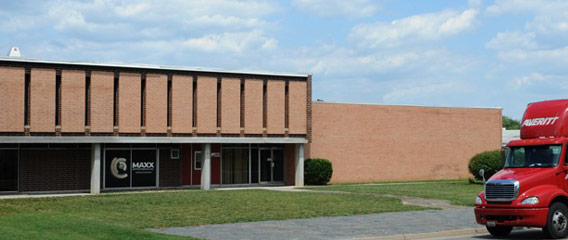
in the old Valley Rich Dairy building, a vast edifice that they plan
to fill one day.
"Virginia Tech has been good to my family," said Samuels, whose two sons
– Courtney (marketing management '07), currently in sales and marketing
for Maxx, and Joel, a senior agricultural and applied economics major –
are also Hokies. "We wanted to give back what was given to us."
The entrepreneur was also drawn to the region because of easy access to major
highways and because he saw an area moving from its reliance on the railroad
to something more technical and requiring more education. "Virginia Tech is
creating a technology base. Tech is perfectly positioned to narrow the [knowledge]
gap," Samuels said.
Samuels' comments confirm what Derick Maggard, executive director of the
Roanoke-Blacksburg Technology Council (RBTC), believes. "The region offers a
compelling case for entrepreneurs who are looking for great talent and a quality
of life that is second to none," said Maggard, citing the impact of area colleges
and universities and organizations committed to economic growth. The RBTC interacts
with alumni who have returned and rediscovered the area, coming away "astonished
at the redevelopment of Roanoke, the growth of the [Virginia Tech Corporate Research
Center, and more], and they are so ecstatic to be part of the action," Maggard said.
"These individuals are so energized by the progress, growth, and culture."
The growth is making headlines. In 2011, according to the Bureau of Labor Statistics,
employment in Blacksburg, Christiansburg, and Radford – considered linked as one
Metropolitan Statistical Area (MSA) – grew by 5.32 percent, ranking No. 3 nationally
among 363 MSAs. "The general feel is that [the region has] been very fortunate … to
have weathered the recession better than most," said Aric Bopp, executive director
of the New River Valley Economic Development Alliance. "But it isn't until you start
looking at some of the statistics do you realize just how fortunate we have been."
Pointing to analysts' predictions that microencapsulation technologies have an
annual market potential of $39 billion by 2015, the Samuels plan to add to that
employment base. Microencapsulation inside a sphere as tiny as half the thickness
of a human hair has numerous uses, including protecting lifesaving probiotics
from degradation during processing and storage; extending the shelf life of bakery
products and masking the bitterness of ingredients such as caffeine in weight-loss
supplements. According to Samuels, Maxx was the first company, using his proprietary
process, to successfully disguise the bitterness of green tea extract, which allows
it to be used in products for its health benefits.
The Samuels also create opportunities for students. Josh Bennett (biological sciences
'12) benefitted from an internship, gaining experience in quality control. "[Winston]
was always willing to listen to my own ideas that I had learned in food-science classes,"
said Bennett. "He would be open-minded about implementing any new practices to make his
factory better. Winston gave me the confidence to elaborate and expand on my own ideas."
The Samuels, who plan to expand the business internationally, have established the Samuels
Study Abroad Scholarship at Virginia Tech to allow students to travel to such places as
South Korea and South Africa. "We see ourselves as globalists, as internationalists at
heart," partly because of stints with Monsanto in Toronto, Canada, and Sao Paulo, Brazil,
Winston said. "There's a bigger universe out there."
As part of that global mission, the Samuels are actively hiring refugees who wish
to work in the Roanoke area. "They are tremendous workers," Winston said. "We want
for them to feel welcome, we want for them to come to America, as I came to
America. … We want to work jointly with Virginia Tech … to give them a new life."
For more information, contact:
Courtney Samuels
Maxx Performance Inc.
3621 Aerial Way Drive
Roanoke VA 24018
540.239.4684
courtney.samuels@maxxperform.com
Back to News & Events
|
|
|